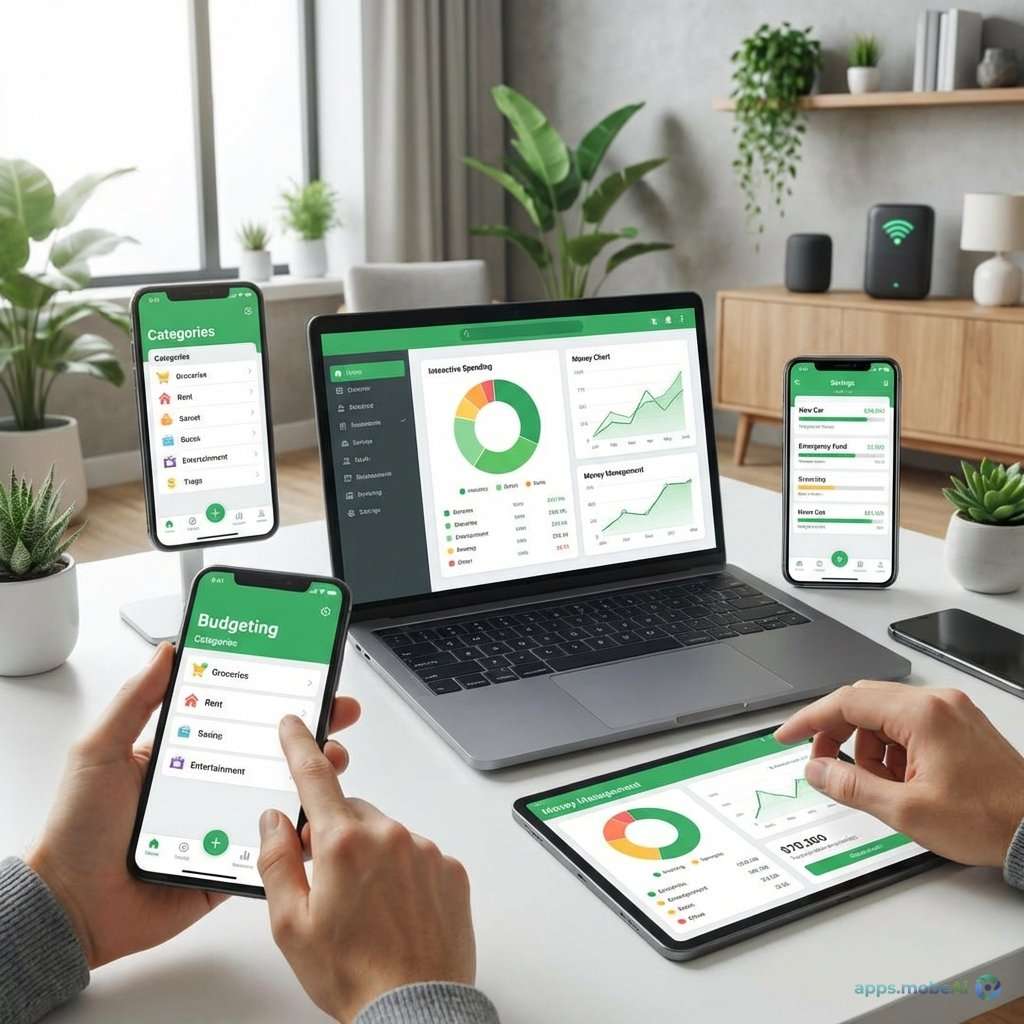
The gap between intending to save money and actually saving money often comes down to automation. Manual budgeting
requires constant attention, discipline, and decision-making that exhausts willpower over time. The most effective
budgeting apps recognize this reality, building automation features that make saving the default rather than an
active choice requiring ongoing effort.
Modern budgeting applications have evolved beyond simple expense trackers into sophisticated personal finance
platforms that categorize transactions automatically, alert you to unusual spending, and even move money into
savings without manual intervention. The right tool matches your financial style while reducing the friction that
often derails budgeting intentions.
This comprehensive guide examines the leading budgeting applications in 2026, comparing their tracking approaches,
automation capabilities, and features that actually help you build savings. Whether you prefer hands-on budgeting
control or automated money management, you’ll discover the right tool for your financial goals.
I. Why Automation Matters in Budgeting
Understanding why automated budgeting works better than manual approaches provides context for evaluating features.
The Willpower Problem
Manual budgeting demands ongoing decisions about every expense—decisions that deplete limited willpower. After a long
day, choosing to skip a purchase or move money to savings feels harder than it should. Automation removes these
decisions from the moment, establishing beneficial behaviors that run without continuous mental effort.
Friction Reduction
Every step between intention and action creates friction that reduces follow-through. Apps requiring manual
transaction entry, complex categorization, or separate transfer steps introduce friction points where good
intentions fail. Streamlined automation minimizes these barriers.
Immediate Feedback
Understanding spending in real-time enables adjustment before problems compound. Waiting until month-end to review
finances means discovering overspending too late to correct. Automated tracking with timely alerts provides the
visibility needed for in-the-moment decisions.
Behavioral Psychology
Effective budgeting apps leverage behavioral economics—automatic savings before you see money, round-up mechanisms
that make saving painless, and spending categorization that reveals hidden patterns. These psychological nudges work
better than raw willpower.
II. YNAB (You Need A Budget): The Methodology
YNAB isn’t just an app—it’s a budgeting philosophy built into software. Its proactive approach to budgeting has
developed passionate followers who credit the system with transforming their financial lives.
Zero-Based Budgeting
YNAB requires assigning every dollar a job—allocating funds to categories until reaching zero unbudgeted. This
approach ensures intentional spending rather than money disappearing into vague categories. The psychological impact
of deliberately allocating money changes spending behavior.
Rolling with the punches accommodates real-life flexibility. When overspending occurs in a category, YNAB encourages
moving money from other categories rather than feeling guilty. This practical adaptability sustains long-term
adherence.
Aging Your Money
YNAB’s “age of money” metric tracks how long funds sit before spending occurs. The goal is aging money to at least 30
days—meaning you’re spending last month’s income, not this week’s. This buffer eliminates paycheck-to-paycheck
stress and provides genuine financial stability.
Goal Setting
Savings goals within YNAB allocate money toward specific objectives—emergency funds, vacations, major purchases.
Visual progress toward goals motivates continued saving. Goal-based categories prioritize long-term objectives
alongside monthly expenses.
Bank Sync and Import
YNAB imports transactions from linked bank accounts, reducing manual entry. However, YNAB encourages manual approval
and categorization—arguing that this engagement reinforces spending awareness. The hybrid approach balances
convenience with intentionality.
Pricing Structure
YNAB costs $14.99 monthly or $99 annually—premium pricing for budgeting software. A 34-day free trial enables
thorough evaluation. The price point reflects YNAB’s positioning as education plus software rather than purely a
tracking tool.
Strengths and Limitations
YNAB excels for users wanting proactive budgeting methodology, not just passive tracking. The aging money concept
builds genuine financial security. Educational resources support long-term behavior change.
However, the learning curve proves steeper than passive trackers. The required engagement doesn’t suit users wanting
fully automated solutions. Premium pricing creates barrier for budget-constrained users.
III. Mint: The Free Tracker (Sunset Impact)
Mint dominated free budgeting for years before Intuit announced its sunset in early 2024, transitioning users to
Credit Karma. Understanding this context matters for evaluating current options.
What Mint Offered
Mint provided free, ad-supported budgeting with automatic transaction categorization, budget tracking, bill
reminders, and credit score monitoring. Bank sync imported transactions without manual entry. The combination of
features at zero cost built a massive user base.
Credit Karma Transition
Intuit migrated Mint users to Credit Karma, which maintains some budgeting features but emphasizes credit monitoring
and financial product recommendations. Users missing Mint’s full budgeting capabilities have migrated to
alternatives.
Lessons for Evaluation
Mint’s sunset illustrates risks of free services—business model changes can eliminate tools you depend on. When
evaluating free options, consider sustainability and company commitment to the product category.
IV. Copilot: The Modern Approach
Copilot (originally Copilot Money) has emerged as a leading option for users seeking modern design, powerful
automation, and strong privacy practices.
Automatic Tracking
Copilot connects to financial accounts through Plaid, importing and categorizing transactions automatically. Machine
learning improves categorization accuracy over time based on your corrections. New transactions appear quickly after
processing.
Spending Insights
Real-time spending summaries show how current month compares to typical patterns. Category-level analysis reveals
where money goes. Unusual spending alerts notify you when transactions seem out of pattern.
Subscription Management
Copilot identifies recurring subscriptions from transaction patterns, surfacing ongoing costs you might forget.
Subscription tracking helps identify services to cancel when reducing expenses.
Investment Tracking
Beyond spending, Copilot tracks investment accounts, showing net worth across bank and brokerage accounts. Portfolio
performance visibility complements expense management for complete financial picture.
Privacy Focus
Copilot emphasizes privacy—no ads, no selling data, subscription-based business model. This approach addresses
concerns users have about free services monetizing their financial data.
Pricing Structure
Copilot costs $10.99 monthly or $94.99 annually. iOS-only availability currently limits audience. The price positions
Copilot as premium option with corresponding quality expectations.
Strengths and Limitations
Copilot provides excellent design, strong automation, and privacy-respecting business model. Investment tracking adds
value beyond pure budgeting. The experience feels modern and thoughtful.
However, iOS exclusivity eliminates Android users. Pricing sits at premium tier. Backup and export capabilities have
historically been limited.
V. Monarch Money: The Feature-Rich Alternative
Monarch Money has grown substantially as users sought Mint alternatives, offering comprehensive features with
collaborative capabilities.
Comprehensive Overview
Monarch provides complete financial picture—bank accounts, credit cards, investments, loans, and property. Net worth
tracking shows overall financial position. Cash flow visualization compares income and spending over time.
Collaborative Budgeting
Monarch supports multiple users on one account, enabling couples and families to budget together. Shared visibility
into spending and progress toward goals facilitates financial communication. This collaboration feature
differentiates Monarch from individual-focused alternatives.
Goal Tracking
Savings goals with progress tracking motivate saving for specific objectives. Goal-linked accounts can automatically
allocate contributions. Visual progress toward goals provides positive reinforcement.
Budget Flexibility
Monarch supports various budgeting approaches—zero-based for hands-on budgeters, simpler category limits for those
wanting less structure. Recurring budgets roll forward monthly while accommodating adjustments.
Pricing Structure
Monarch costs $14.99 monthly monthly or $99.99 annually. Free tier provides limited functionality—primarily useful
for evaluation. Pricing matches YNAB, positioning Monarch as premium alternative with different approach.
Strengths and Limitations
Monarch excels at comprehensive financial tracking with collaborative features. The balance between structure and
flexibility suits varied preferences. Cross-platform availability (web, iOS, Android) maximizes accessibility.
However, subscription cost presents barrier. Some users find the interface less intuitive than simpler alternatives.
Feature richness can overwhelm users wanting simplicity.
VI. Automatic Savings Apps
Beyond budgeting trackers, specialized apps focus specifically on automating savings.
Qapital
Qapital enables rule-based savings automation. Rules can trigger savings on purchases (round-ups), time patterns
(weekly transfers), or behavioral triggers (saving when reaching step goals). These automated transfers accumulate
without active attention.
Goal visualization shows progress toward savings objectives. FDIC-insured accounts hold saved funds. Pricing starts
at $3 monthly for basic functionality.
Digit
Digit analyzes income and spending patterns, automatically transferring amounts it determines you won’t miss. The
algorithm adapts to your finances, increasing savings when income rises and reducing when finances tighten.
Overdraft protection prevents automated savings from causing problems. Goals organize savings toward specific
purposes. Pricing is $5 monthly after free trial.
Acorns
Acorns combines round-up savings with automated investment. Spare change from purchases invests automatically in
diversified portfolios. Recurring investments supplement round-ups for consistent wealth building.
Family plans include accounts for children. Banking features expand Acorns beyond pure investment. Pricing starts at
$3 monthly.
VII. Feature Comparison
Comparing platforms across key dimensions reveals different strengths.
| Feature | YNAB | Copilot | Monarch |
|---|---|---|---|
| Approach | Proactive | Tracking | Comprehensive |
| Auto-categorization | Yes + review | Yes | Yes |
| Investment Tracking | Limited | Yes | Yes |
| Collaboration | No | No | Yes |
| Annual Price | $99 | $95 | $100 |
Best for Behavior Change
YNAB’s methodology actively changes spending behavior through required engagement and proactive allocation. Users
wanting to transform relationship with money should consider YNAB despite learning curve.
Best for Passive Tracking
Copilot excels at automatic tracking with minimal effort required. Users wanting visibility without intensive
engagement appreciate Copilot’s approach.
Best for Couples/Families
Monarch’s collaborative features enable shared financial management. Households wanting joint visibility and goal
tracking should prioritize Monarch.
VIII. Free Alternatives
Premium apps aren’t the only options for budget-conscious users.
PocketGuard
PocketGuard’s free tier provides essential budgeting functionality. The “In My Pocket” feature shows money available
after bills and goals—simplifying the question of how much you can spend. Premium at $7.99 monthly adds more
features.
Goodbudget
Goodbudget implements envelope budgeting digitally—allocating money to spending categories as virtual envelopes. The
free tier covers basic use; paid plans add more envelopes and accounts. The approach suits users wanting budget
allocation without bank linking.
Spreadsheets
For complete control, custom spreadsheets enable personalized budgeting. Google Sheets templates provide starting
points. The approach requires more manual effort but offers unlimited flexibility.
IX. Selecting the Right Tool
Matching budgeting app to your style ensures sustained use.
Consider Your Engagement Level
How much time and attention will you invest in budgeting? YNAB requires regular engagement to work properly. Copilot
and Monarch work with minimal attention. Match tool to realistic commitment level.
Evaluate Financial Complexity
Simple finances need simple tools. Complex situations—multiple accounts, investments, shared finances—benefit from
comprehensive platforms. Don’t over-engineer simple needs.
Assess Privacy Concerns
Comfort with financial data sharing varies. Paid apps with subscription business models typically offer stronger
privacy than ad-supported alternatives. Evaluate data practices if privacy matters to you.
Trial Before Committing
Free trials enable evaluation with real financial data. Use trial periods extensively before annual commitments. The
right fit becomes clear through actual use.
X. Implementation Best Practices
Successful budgeting requires more than app selection.
Start with Tracking
Before setting budgets, track spending for a month to understand current patterns. Data reveals actual spending
versus imagined spending. Base budgets on reality rather than aspiration.
Set Realistic Budgets
Initial budgets should reflect current spending with modest adjustment goals. Drastic cuts fail quickly. Sustainable
improvement comes from gradual refinement over months.
Review Regularly
Weekly budget check-ins catch issues before they compound. Monthly reviews assess progress and adjust categories.
Regular engagement, even brief, maintains budgeting effectiveness.
Automate Savings First
Pay yourself first through automated transfers to savings. When savings happen automatically before spending
decisions, consistent accumulation follows.
XI. Conclusion
Budgeting apps in 2026 offer powerful automation that makes saving money easier than ever. YNAB provides
methodological approach for users wanting active financial transformation. Copilot delivers modern, automated
tracking with strong privacy practices. Monarch offers comprehensive features with collaborative capabilities for
households.
The best budgeting app is the one you’ll actually use consistently. Feature comparisons matter less than sustained
engagement. Choose a tool matching your style and commitment level, then implement gradually for sustainable
improvement.
Automation reduces but doesn’t eliminate the need for intentionality. Even the most automated systems require
periodic review and adjustment. Technology supports good financial habits; it doesn’t replace the fundamental
decisions that shape your financial future.

.jpg)
.jpg)