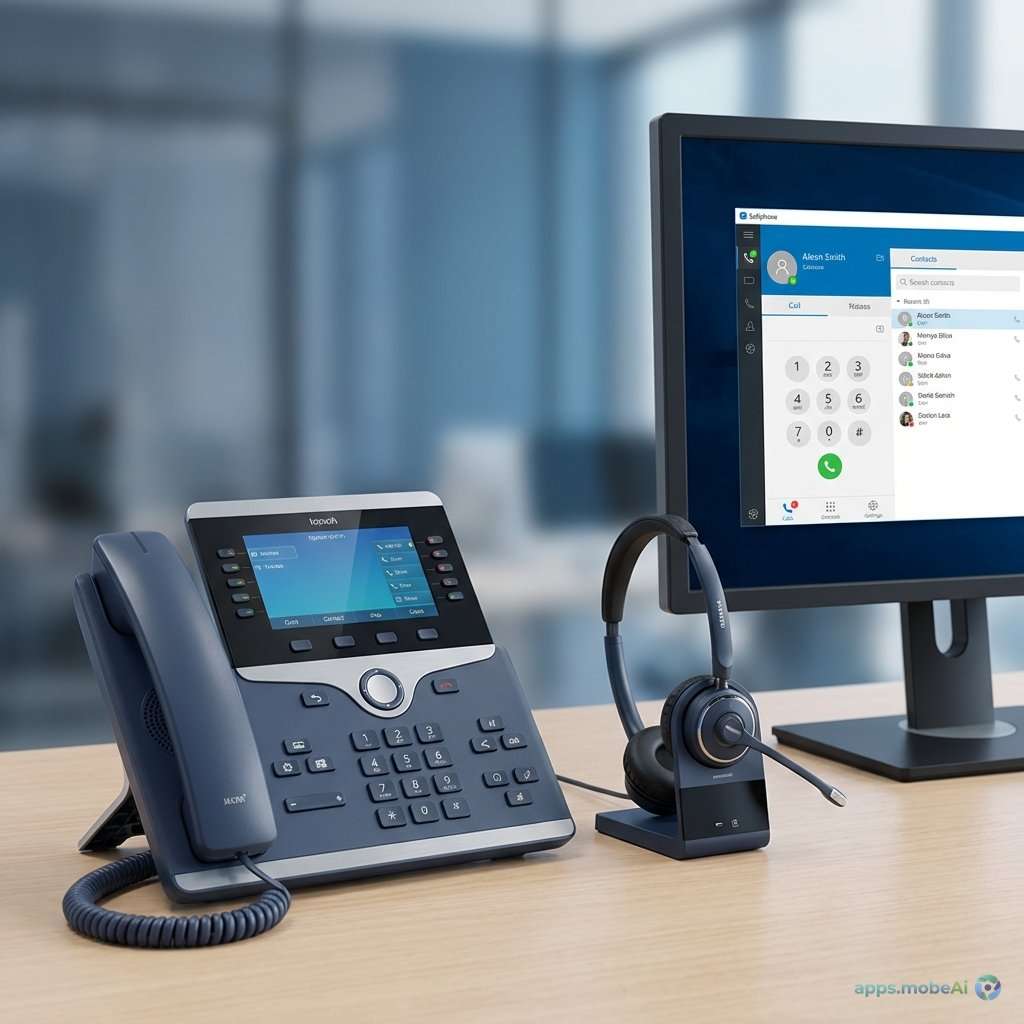
Business telephone systems have undergone fundamental transformation as Voice over Internet Protocol (VoIP)
technology has matured. Traditional phone infrastructure—copper lines, PBX hardware, and physical maintenance—has
given way to cloud-based systems that deliver superior capabilities at lower cost while enabling the distributed
work patterns that define modern business.
VoIP for business extends far beyond replacing desk phones with internet calling. Modern platforms integrate voice,
video, messaging, and fax into unified communications systems. Advanced features that once required expensive
hardware deployments now arrive as software updates. Scalability that took months with traditional systems happens
in minutes with cloud platforms.
This comprehensive guide examines VoIP services for business, comparing RingCentral, Vonage, and 8×8 across features,
call quality, integration capabilities, and pricing models. Whether you’re transitioning from traditional phone
systems, expanding telecommunications capacity, or establishing communications for new businesses, you’ll discover
which platform best serves your organizational requirements.
I. Understanding Business VoIP
Understanding VoIP technology and its business applications provides foundation for platform evaluation.
How VoIP Works
VoIP converts voice to digital data transmitted over internet connections rather than dedicated telephone networks.
This fundamental shift enables features impossible with analog technology—location independence, software-based
features, and internet-scale economies.
Beyond Voice Calling
Modern VoIP platforms have evolved into Unified Communications as a Service (UCaaS) offerings. Voice, video
conferencing, team messaging, SMS, and fax consolidate into integrated platforms. Communication tools work together
rather than operating as separate systems.
Business Benefits
Cost savings compared to traditional systems often motivate initial VoIP adoption. But capability advantages matter
equally—work-from-anywhere flexibility, advanced call routing, analytics and reporting, and continuous feature
updates without hardware upgrades.
Deployment Considerations
VoIP depends on internet connectivity—network quality directly impacts call quality. Bandwidth requirements, Quality
of Service settings, and internet redundancy deserve attention during planning. Modern office and home connections
typically suffice, but poor networks create frustrating call experiences.
II. RingCentral: Market Leadership
RingCentral has established market leadership through comprehensive features and enterprise capabilities.
Unified Communications Platform
RingCentral MVP (Message, Video, Phone) integrates all communication channels. Voice calling, video meetings, team
messaging, SMS, and fax work together seamlessly. Users manage communications through unified desktop and mobile
applications.
Phone System Features
Cloud PBX provides enterprise phone system capabilities—auto-attendant, call queues, ring groups, and extension
management. Visual voicemail transcribes messages. Call recording captures conversations for training or compliance.
Advanced call routing directs calls based on time, availability, or caller information.
Video Meetings
RingCentral Video provides video conferencing within the unified platform. Screen sharing, recording, and breakout
rooms enable productive meetings. Integration means meetings start from messaging conversations naturally.
Team Messaging
Team messaging provides persistent chat with channels and direct messages. Task management adds action tracking. File
sharing enables document collaboration. This messaging competes with dedicated platforms like Slack.
Contact Center Option
RingCentral Contact Center extends to full contact center capabilities for organizations with customer service needs.
Omnichannel support, workforce management, and quality management serve contact center requirements beyond basic
business phone.
Integration Ecosystem
Extensive integrations connect RingCentral to CRM systems (Salesforce, HubSpot), productivity tools (Microsoft 365,
Google Workspace), and other business applications. Click-to-call from CRM records and automatic call logging
streamline sales and service workflows.
RingCentral AI
AI capabilities include conversation intelligence, real-time transcription, and meeting insights. These features
extract value from communication data and accelerate productivity.
Pricing
Core plan starts around $20/user/month with basic phone features. Advanced at $25/user/month adds more features.
Ultra at $35/user/month includes full capabilities. Contact center pricing varies based on requirements.
Strengths and Limitations
RingCentral excels through comprehensive features and market maturity. The unified platform reduces tool sprawl.
Enterprise customers receive proven reliability and support. Integration ecosystem connects to common business
tools.
However, feature comprehensiveness creates complexity for simpler needs. Pricing rises with feature tiers. Some users
report interface overwhelm. Smaller businesses may find the platform more than necessary.
III. Vonage: API Flexibility
Vonage combines business communications with powerful API platforms for organizations wanting customization
capabilities.
Business Communications
Vonage Business Communications provides cloud phone system with voice, video, messaging, and mobile apps. Core
capabilities match competitor offerings—auto-attendant, call queues, voicemail, and extensions.
Video and Meetings
Vonage Meetings provides video conferencing for internal and external collaboration. Screen sharing, recording, and
dial-in options support meeting needs. The experience integrates with voice and messaging.
API Platform Heritage
Vonage acquired Nexmo and brings powerful communication APIs. Organizations with development resources can build
custom communications experiences. SMS, voice, video, and two-factor authentication APIs enable embedded
communications in applications.
Conversational Commerce
Vonage emphasizes customer engagement use cases. Communications for customer support, sales, and marketing leverage
API capabilities. Organizations seeking programmatic communication control find Vonage attractive.
Integration Options
Standard integrations connect to CRM and productivity applications. API platform enables custom integrations beyond
pre-built options. This flexibility serves organizations with specific integration requirements.
Pricing
Mobile plan starts around $19.99/user/month for mobile-focused usage. Premium at $29.99/user/month adds desktop phone
support. Advanced at $39.99/user/month includes additional features. API usage carries separate consumption-based
pricing.
Strengths and Limitations
Vonage excels for organizations wanting API flexibility and customization capabilities. Developer-friendly platform
serves organizations with technical resources. Customer engagement focus suits sales and service-centric businesses.
However, full platform potential requires development resources. Standard offerings may lag RingCentral’s polish.
Pricing complexity with separate API consumption can challenge budgeting.
IV. 8×8: Global Unified Communications
8×8 provides unified communications with particular strength in global deployment and contact center capabilities.
Unified Communications
8×8 Work integrates voice, video, chat, and SMS in unified experience. Cloud PBX provides business phone
fundamentals. The platform serves as complete communications infrastructure.
Global Reach
8×8 operates global network with direct presence in many countries. This infrastructure supports multinational
deployments with local phone numbers and regional compliance. Organizations with international operations benefit
from this global architecture.
Contact Center
8×8 Contact Center provides comprehensive customer service capabilities. Omnichannel support, workforce optimization,
and quality management serve contact center needs. Native integration with communications platform creates unified
customer experience.
Video Meetings
8×8 Meet provides video conferencing with screen sharing, recording, and large meeting support. Integration with
voice and messaging creates seamless collaboration experience.
Analytics and Reporting
8×8 emphasizes analytics for communication optimization. Call quality monitoring, usage analytics, and customer
experience insights help organizations improve communications effectiveness.
Pricing
X2 plan starts around $28/user/month with voice, video, and chat. X4 at $57/user/month adds advanced features and
analytics. Contact center pricing varies based on capabilities. International calling plans affect total cost for
global usage.
Strengths and Limitations
8×8 excels for global organizations needing unified communications with international presence. Contact center
integration serves customer service requirements. Analytics capabilities support communication optimization.
However, pricing positions at premium levels. Interface and experience may feel less polished than RingCentral.
Smaller domestic businesses might find other options more appropriate.
V. Additional VoIP Options
Several other providers serve specific needs and market segments.
Microsoft Teams Phone
Microsoft Teams Phone adds telephony to Teams for organizations already using Microsoft 365. PSTN connectivity
enables external calling from Teams. Integration with Teams collaboration creates unified experience for
Microsoft-centric organizations.
Google Voice for Google Workspace
Google Voice provides cloud phone for Google Workspace users. Simple interface suits organizations wanting basic
phone capabilities integrated with Google tools. Features are more limited than dedicated platforms.
Dialpad
Dialpad emphasizes AI capabilities for business communications. Voice intelligence, real-time transcription, and
conversation insights differentiate the platform. Organizations prioritizing AI features should evaluate Dialpad.
Zoom Phone
Zoom Phone extends Zoom’s meeting platform to telephony. Organizations standardizing on Zoom find natural extension.
Phone capabilities integrate with Zoom’s strong meeting experience.
Grasshopper and Similar
Simpler services like Grasshopper serve small businesses wanting professional phone presence without full UCaaS
platforms. Virtual phone numbers, voicemail, and basic routing suit solopreneur and small business needs at lower
cost.
VI. Feature Comparison
Comparing VoIP platforms across key dimensions helps match solutions to requirements.
Comparison Table
| Provider | Strength | Starting Price | Best For |
|---|---|---|---|
| RingCentral | Comprehensive | $20/user/mo | Enterprise UCaaS |
| Vonage | API Platform | $20/user/mo | Custom Development |
| 8×8 | Global Reach | $28/user/mo | Multinational Orgs |
| Teams Phone | M365 Integration | $15/user/mo | Microsoft Users |
| Zoom Phone | Zoom Integration | $10/user/mo | Zoom Users |
Full Platform vs. Add-On
RingCentral, Vonage, and 8×8 provide complete UCaaS platforms. Teams Phone and Zoom Phone add telephony to existing
platforms. Choose standalone for communications-first approach or add-on for platform consolidation.
Feature Depth vs. Simplicity
Enterprise platforms provide extensive features with corresponding complexity. Simple services like Grasshopper or
Google Voice suit organizations wanting basics without complexity. Match platform sophistication to actual
requirements.
VII. Selecting the Right VoIP Platform
Selection should consider organizational size, existing tools, and communication requirements.
For Growing Businesses
RingCentral provides the most comprehensive platform that scales with growth. Feature depth supports evolution from
simple phone needs to unified communications. Market leadership means proven reliability.
For Microsoft 365 Organizations
Microsoft Teams Phone integrates telephony into existing Teams environment. If Teams serves as communication hub,
adding phone makes sense. However, evaluate whether Teams Phone features meet requirements compared to dedicated
platforms.
For Developer-Led Organizations
Vonage’s API platform enables custom communication experiences. Organizations with development resources can build
differentiated customer interactions. The combination of standard platform and API flexibility serves technical
organizations.
For Multinational Organizations
8×8’s global network supports international deployments effectively. Regional presence, local numbering, and
compliance knowledge matter for organizations operating across borders.
For Small Businesses
Simple services like Grasshopper or Google Voice may suffice for small teams with basic phone needs. Full UCaaS
platforms provide more than small businesses often require and want to pay for.
VIII. Implementation Considerations
Successful VoIP deployment requires attention beyond platform selection.
Network Readiness
Assess network quality before deployment. Adequate bandwidth, appropriate Quality of Service settings, and internet
reliability directly impact call quality. Address network issues before they create communication problems.
Number Porting
Transferring existing phone numbers (porting) takes time and coordination. Plan porting timing carefully to avoid
communication disruption during transition.
Training and Adoption
New phone systems require user training for effective adoption. Feature awareness determines whether capabilities get
used. Plan training alongside technical deployment.
Compliance Considerations
Some industries have specific telecommunications compliance requirements—call recording consent, data retention, and
similar regulations. Ensure selected platforms meet applicable requirements.
IX. Conclusion
VoIP platforms have matured into comprehensive unified communications solutions that exceed traditional phone system
capabilities while reducing costs and enabling flexible work. Selection depends on organizational scale, existing
tools, and specific communication requirements.
RingCentral provides the most comprehensive platform for organizations wanting unified communications without
compromise. The market-leading position, feature depth, and integration ecosystem serve enterprise requirements
effectively.
Microsoft Teams Phone suits organizations deeply embedded in Microsoft 365 who want telephony integrated with their
existing communication hub. The consolidation benefits justify evaluation against standalone platforms.
Vonage serves organizations wanting API flexibility to build custom communication experiences. The combination of
standard platform and developer capabilities serves technical organizations.
8×8 addresses global organization needs with international infrastructure and contact center capabilities.
Whatever platform you select, remember that successful business communication depends on practices as much as
technology. Clear communication protocols, appropriate tool usage, and effective training determine whether
technology investment translates to productivity improvement. Choose platforms that match your requirements, then
focus on the behaviors that make communication actually work.